Morera
12 February 2026
- Common name: Paper mulberry or Turkish mulberry
- Scientific name: Broussobetia papyrifera
- Honorary Doctorate: Luis Puelles López
ORIGIN: China, Japan, Taiwan, and Malaysia.
CHARACTERISTICS:
- A dioecious, deciduous tree that can reach 15 m in height.
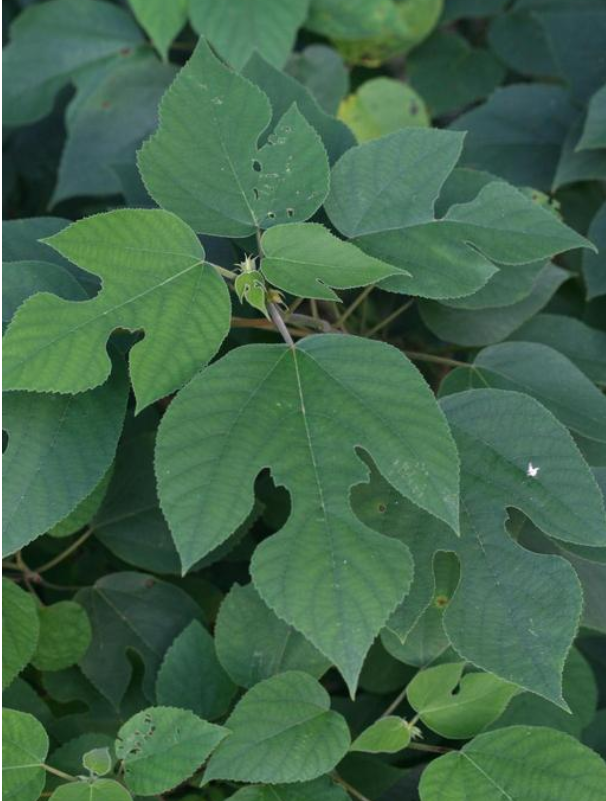
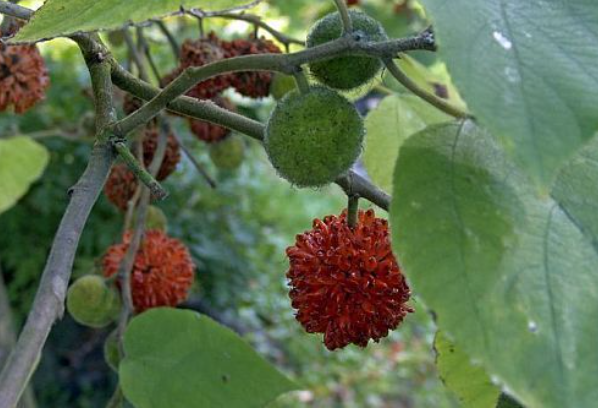
- The leaves vary in shape (even on the same branch), from simple, ovate, and heart-shaped to deeply lobed (lobed leaves appear more frequently on fast-growing young specimens), 7 to 20 cm long, with a rough upper surface and a hairy underside with finely serrated margins. The male (staminate) flowers are borne in an oblong inflorescence, and the female (pistillate) flowers in a globular one. In summer, the female inflorescences develop into an edible, sweet, and juicy (but too fragile for commercial sale) reddish-orange fruit, 3 to 4 cm in diameter, which is an important food source for wildlife.
FUN FACTS:
- The bark is composed of very strong fibers from which fibers with morphological characteristics similar to those of flax and hemp are extracted, making it suitable for manufacturing high-quality paper, especially handmade paper. In 105 AD, T’sai Lun, an employee of the Chinese Emperor Ho Ti, first manufactured paper from a vegetable pulp made of bamboo, mulberry, and other plant fibers, thus giving rise to the paper we know today. T’sai Lun undertook this task following the emperor’s express orders, who instructed him to search for new materials to write on. For 500 years, the technique of papermaking belonged solely to the Chinese, who jealously guarded it during that long period.
USES:
- The shoots and tender leaves are used to feed deer. In Fiji, where this species was introduced during migratory voyages, the bark is used to make textiles called “masi,” which are dyed and decorated with traditional motifs and used to make clothing worn during many ceremonies, including weddings, funerals, and births.