DAVID COX
13 February 2026
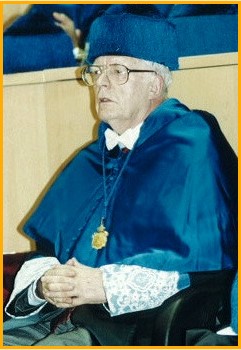
David Roxbee Cox (Birmingham, July 15, 1924 – January 18, 2022) was an English statistician. Among his numerous positions, he held professorships at Birkbeck College (1961–1965) and Imperial College (1966–1988) and served as president of the International Statistical Institute (1995–1997).
In 2016, he was awarded the BBVA Foundation Frontiers of Knowledge Award in Basic Sciences.
In 1947, Cox married Joyce Drummond, and they had four children. On January 18, 2022, Cox died at the age of 97.
He is best known for Cox regression, a fundamental tool in the field of survival analysis.
From 1966 to 1991, he was the editor of Biometrika.
Aeronautical engineer Harold Roxbee Cox was a distant cousin. He attended Handsworth High School. Cox studied mathematics at St. John’s College, Cambridge, and received his PhD from the University of Leeds in 1949, supervised by Henry Daniels and Bernard Welch.
Career
From 1944 to 1946, he worked at the Royal Aircraft Establishment, from 1946 to 1950 at the Wool Industries Research Association in Leeds,[4] and from 1950 to 1956 at the Statistics Laboratory of the University of Cambridge. From 1956 to 1966, he was a lecturer and then a professor of statistics at Birkbeck College, London. In 1966, he became Chair of Statistics at Imperial College London, where he later became Head of the Mathematics Department. In 1988, he became Principal of Nuffield College and a member of the Department of Statistics at the University of Oxford. He formally retired from these positions in 1994. [4] He has made pioneering and important contributions in numerous areas of applied statistics and probability, the best known of which are:
Logistic regression, which is used when the variable to be predicted is categorical (i.e., it can take a limited number of values, e.g., gender, US census race), binary (a special case of categorical with only two values, e.g., success/failure, illness/non-illness), or ordinal, where the categories can be ranked (e.g., pain intensity can be absent, mild, moderate, severe, unbearable). Cox’s 1958 paper addressed the case of binary logistic regression.
- The proportional hazards model, widely used in the analysis of survival data, was developed by him in 1972. [6] One example is survival times in medical research, which can be related to information about patients, such as age, diet, or exposure to certain chemicals.
- The Cox process was named after him.
- Cox has supervised, collaborated with, and encouraged many young researchers who are now prominent in statistics. He has served as president of the Bernoulli Society, the Royal Statistical Society, and the International Statistical Institute. He is an honorary fellow of Nuffield College and St John’s College, Cambridge, and a member of the Department of Statistics at the University of Oxford.
Cox has received numerous awards and distinctions for his work. He has been awarded the Silver (1961) and Gold (1973) Guy Medals of the Royal Statistical Society. He was elected a Fellow of the Royal Society of London in 1973, knighted by Queen Elizabeth II in 1985, and made an Honorary Fellow of the British Academy in 2000. He is a Foreign Associate of the US National Academy of Sciences and a Foreign Member of the Royal Danish Academy of Sciences and Letters. In 1990, he won the Kettering Prize and Gold Medal for Cancer Research for “the development of the proportional hazards regression model.” In 2010, he was awarded the Royal Society’s Copley Medal “for fundamental contributions to the theory and applications of statistics.”[8] He is also the first recipient of the International Statistics Prize. In 2013, Cox was elected an Honorary Fellow of the Royal Society of Edinburgh. In 2016, he won the BBVA Foundation Frontiers of Knowledge Award in the Basic Sciences category with Bradley Efron, for the development of “pioneering and highly influential” statistical methods that have proven indispensable for obtaining reliable results in a wide range of disciplines from medicine to astrophysics, genomics, and particle physics.
Bibliography
Cox has written or co-authored 300 articles and books. From 1966 to 1991, he was editor of Biometrika. His books include:
- Planning Experiments (1958)
- Queues (Methuen, 1961). With Walter L. Smith
- Renewal Theory (Methuen, 1962).
- The Theory of Stochastic Processes (1965). With Hilton David Miller
- Analysis of Binary Data (1969). With Joyce Snell
- Theoretical Statistics (1974). With D.V. Hinkley
- Problems and Solutions in Theoretical Statistics (1978). With D.V. Hinkley
- Point Processes (Chapman and Hall/CRC, 1980). With Valerie Isham
- Applied Statistics: Principles and Examples (Chapman & Hall/CRC, 1981). With Joyce Snell
- Analysis of Survival Data (Chapman and Hall/CRC, 1984). With David Oakes
- Asymptotic Techniques for Use in Statistics (1989). With Ole E. Barndorff-Nielsen
- Inference and Asymptotics (Chapman & Hall/CRC, 1994). With Ole E. Barndorff-Nielsen
- Multivariate Dependencies: Models, Analysis, and Interpretation (Chapman & Hall, 1995). With Nanny Wermuth
- The Theory of Experimental Design (Chapman and Hall/CRC, 2000). With Nancy M. Reid
- Complex Stochastic Systems (Chapman & Hall/CRC, 2000). With Ole E. Barndorff-Nielsen and Claudia Klüppelberg
- Components of Variance (Chapman and Hall/CRC, 2003). With P.J. Solomon
- Principles of Statistical Inference (Cambridge University Press, 2006). ISBN 978-0-521-68567-2
- Selected Statistical Papers by Sir David Cox, 2-Volume Set
- Principles of Applied Statistics (CUP) with Christl A. Donnelly
He is an editor-designate of the following books:
D.R. Cox and D.M. Titterington, eds. (1991). Complex Stochastic Systems. Royal Society. ISBN 0-85403-453-6.
- The Collected Works of John Tukey (Chapman & Hall/CRC, 1992). Editor.
- Time Series Models in Econometrics, Finance, and Others (Chapman & Hall/CRC, 1996). With D.V. Hinkley and Ole E. Barndorff-Nielsen (editors)
- D.M. Titterington and D.R. Cox, eds. (2001). Biometrika: One Hundred Years. Oxford University Press. ISBN 0-19-850993-6.
The following book was published in his honor.
- Celebrating Statistics: Articles in Honor of Sir David Cox on His 80th Birthday. ISBN 0-19-856654-9